When establishing a new clinical panel for flow cytometry, close attention should be paid to the epitope density of each of the surface proteins of interest. Bright fluorochromes should be paired with less dense proteins and conversely dim fluorochromes should be utilized for more dense protein expression. Once the monoclonal antibodies (mAbs) and fluorochromes have been selected that best defines the populations of interest, the mAb cocktail must be verified to ensure not only that the panel will generate the required information with regard to the populations being defined, but also that each of the antibodies will not exhibit any stoichiometric inference.
To begin with the initial verification process, the proper amount of antibody per test is established. Commercially available fluorochrome conjugated mAbs generally have a recommended volume used to stain 106 cells. In order to establish at what volume antibody will be at saturation, a serial dilution is performed. We typically start one dilution above the manufacturers recommend concentration and test four 2 fold dilutions. The titer is deciphered as the volume at which the signal to noise ratio is the greatest.
Using the proper titer for each mAb, a single color tube for each fluorochrome is stained as well as a tube with all of the antibodies in the cocktail. Each of the tubes is acquired on a flow cytometer. Using post acquisition analysis software, the mean fluorescence intensity (MFI) of the positive cells in each of the single color tubes is calculated and compared to the MFI (without moving the regions) for the identical channel in the cocktail. The variation in MFI between the single color tube and the cocktail must be within 15% for each comparison.
Once a working panel has been validated, a master mix of generally sufficient tests to last one month can be made. First the volume of each appropriately titered mAb required for the desired number of test is calculated and added to an amber vial with leak proof cap. Considering the amount of cocktails available in our laboratory and the number of samples that are processed on a daily basis, we have found that it is best to try to keep the volume of each cocktail constant. This is accomplished by the addition to the master mix of an aliquot of FCM buffer (0.5% bovine serum albumin and 0.1% sodium azide in phosphate buffered saline).
For example in a 100-test cocktail for a 4-color assays:
- FITC CD3 5µL titer 500µL cocktail
- PE CD14 2.5µL titer 250µL cocktail
- PcP HLA-DR 10µL titer 1000µL cocktail
- APC CD45 5µL titer 500µL cocktail
- FCM to bring to a 30µL test 750µL cocktail
This approach yields a standardized 30µL of cocktail per test. Each cocktail is stored at 4°C of up to 30 days protected from light. In our experience with tandem dyes PECy5 and PeCy5.5 are stable in cocktails while other tandems such as PeCy7 and APC-H7 (and variants) are not stable in cocktails. We have less experience with 405nm excited dyes, and regardless each lab should establish their own cocktail stabilities.
After 30 days, or when the cocktail volume is low, a new cocktail must be made and verified against the master mix in current use. This is established by staining healthy donor cells with both the new and old cocktails. Post acquisition analysis is performed and the MFI of the positive cells for each of the fluorochromes in the new cocktail is calculated and compared to the MFI for the identical channel in the old cocktail. The variation in MFI between each must be within 15% for each in order to institute the new cocktail.
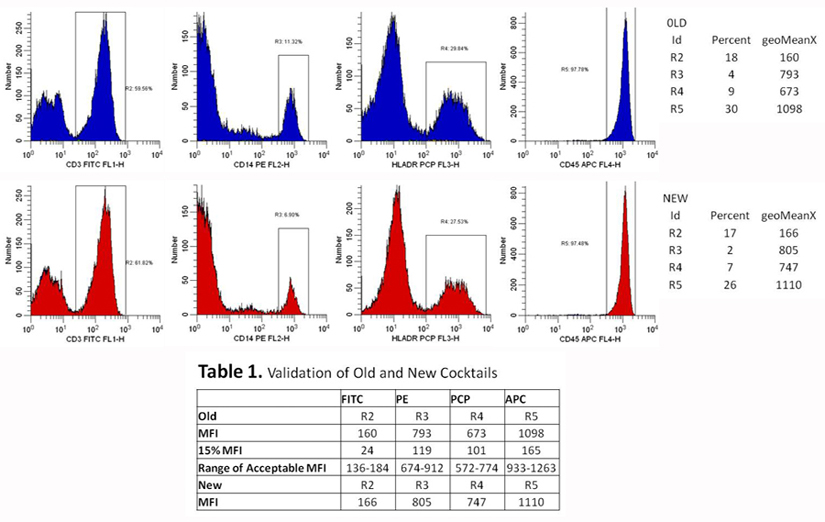
Figure 1. Sample approach to a new panel verification
- Single parameter histograms calculating the positive, brightly staining cells MFI for each fluorochrome used in the current “old” panel
- Single parameter histograms using the same regions as in Panel A to calculate the MFI for each fluorochrome in the “new” panel
Kristen Humphrey, and Aileen Cinquino, Paul K. Wallace
Roswell Park Cancer Institute, Department of Flow and Image Cytometry, Elm & Carlton Streets, Buffalo, NY 14263
E-Mail: Kristen.Humphrey@RoswellPark.org