|
I wonder if your flow cytometry laboratory is like mine. We serve a large academic health system and receive a wide variety of specimens including the following approximate test volumes per year: 5,500 leukemia and lymphoma immunophenotyping, 5,200 immunodeficiency panels, 150 assays for paroxysmal nocturnal hemoglobinuria, and 30 neutrophil oxidative burst assays. You can test your knowledge on one of our cases in this issues e-CSI challenge. However, what really makes our lab. is the people who work there. There are 11 technologists (two part-time), one lead technologist, and a supervisor. Within our group there are individuals with a variety of backgrounds and different levels of experience, ranging from 5 to 25 years in flow cytometry.
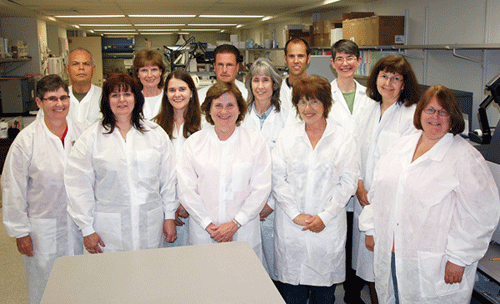
Given this level of experience, you might think our laboratory would be self sufficient. Not at all! Progress in our laboratory has been the result of ideas and advice from many of you. Attending the annual Clinical Cytometry Society meeting has helped us keep up-to-date and identify approachable experts in the field. Talking with other attendees, I’ve been amazed at how different our labs. are, but yet how much we have to share. Indeed, these differences have often helped us look at things from a new perspective. Therefore, I’m excited about moves within the society to promote international interactions. See the Discussion Forum in this issue of the newsletter for a question related to the change in name to the International Clinical Cytometry Society and Brent Wood’s response.
Another benefit of belonging to the flow cytometry community is having a stronger voice when it comes to working with different regulatory agencies and in addressing prevalent, and even global, problems. This issue of the e-Newsletter focuses on the global issues related to providing CD4 testing to support patients infected with HIV. In “Journal Highlights” we have listed key articles on CD4 testing that have been published recently in Cytometry, Part B (Clinical Cytometry). The article by Frank Mandy explains how it is time for us to payback for the benefits clinical flow cytometry has received from CD4 testing and outlines what is needed to provide sustainable CD4 testing in remote rural locations. Michelle Bergeron and Blake Ball describe the QASI international external quality assessment program for CD4 T-cell enumeration currently run through the National Laboratory for HIV Immunology of the Public Health Agency of Canada. The newsletter also features a report from two of our Education Committee members, David Grier and Paul Wallace, who relate their experiences travelling as consultants with the ASCP/CDC PEPFAR program. The laboratories they visited look a little different from mine, but I know we all share a desire to provide the best testing possible.
Let us know about your laboratory.
See you in Houston at the ICCS meeting!
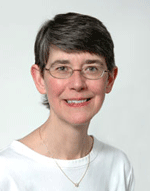
Fiona Craig (Editor)
|
